Did you know that more than 70% of adults will experience back pain related to their spinal nerves at least once in their lifetime? The back nerves chart not only helps decipher those aches but also reveals critical insights that can pinpoint underlying causes and guide you to lasting relief
A Revealing Look: Startling Facts About the back nerves chart
The back nerves chart is much more than just a colorful wall diagram in your doctor’s office. It serves as a powerful diagnostic and educational resource, enabling millions to visualize the network of spinal nerves that link the spinal cord with the rest of your body. As health conditions like lower back pain, tingling, or even gut issues become increasingly prevalent, understanding this chart becomes crucial. For patients, it translates mysterious symptoms into tangible causes, supporting both prevention and treatment efforts. For professionals, it provides a visual “blueprint” that informs targeted therapies, from chiropractic care to neurology consultations. With nerve-related disorders accounting for a major percentage of musculoskeletal complaints globally, having a clear grasp of your symptom map through a nerve chart can be a game changer in managing daily health and making informed decisions for yourself and your family.
Importantly, the spinal nerve chart also plays a vital role in pinpointing the origins of pain and dysfunction. Backed by expert research and real-world experiences, these charts break down complex anatomy into practical, actionable information—making them indispensable for anyone dealing with back pain, unexplained aches, or chronic nerve symptoms. Let’s explore how this tool can transform your perspective on personal well-being.
The Unseen Network: How Millions Rely on spinal nerve Maps
Across the world, millions depend on spinal nerve maps to track and understand their symptoms. These charts provide a roadmap for decoding signals from the body—pinpointing which nerve roots might be compressed or inflamed, guiding diagnostics for professionals, and empowering individuals to ask informed questions about their health. The spinal nerves themselves serve as critical highways, relaying messages between your brain and the body. Even minor misalignments in the spinal column can disrupt this communication, triggering effects in unexpected areas like the large intestine, solar plexus, or even the sex organs. By visualizing these connections, the back nerves chart demystifies a host of common complaints—enabling early intervention and better care outcomes.
Whether you’re experiencing symptoms, considering chiropractic care, or simply curious about your nervous system, the widespread use of spinal nerve maps highlights their role as trusted references for both patients and health professionals. These charts are cornerstones in clinics, educational programs, and self-care regimens, reflecting their universal value.
For those interested in how spinal nerve mapping directly supports chiropractic care and patient communication, you may find it helpful to explore how expert chiropractors utilize these charts in real-world consultations to enhance understanding and guide effective treatment strategies.

Why the back nerves chart Is Critical for Your Well-being
Your health is intricately tied to the functioning of your nervous system. The back nerves chart acts as a visual guide to identify patterns of discomfort or nerve function issues before they escalate. For instance, it can clarify symptoms—such as whether tingling in your fingers originates from a cervical nerve root, or if lower body weakness is due to lumbar compression impacting your sciatic nerve. The clarity it provides allows you, and your healthcare team, to rule out serious conditions and focus on tailored solutions.
Having this chart at home or referencing it during a clinic visit means you take an active role in your health journey. People facing persistent back pain, unexplained digestive discomfort (think large intestine or small intestine symptoms), or sensations in the outer ear and middle ear can quickly relate these to potential nerve pathways. By decoding these links, you help prevent conditions affecting your quality of life—and make more confident decisions when symptoms arise.
What You’ll Learn from the back nerves chart (At a Glance)
The essentials of the spinal nerve pathways
How to interpret a nerve chart for better health
Benefits of understanding the spinal nerve chart for self-care and prevention
Purchasing tips and comparative features
Expert opinions and user insights
Understanding the back nerves chart: An Overview
What Is a back nerves chart? The Foundation Explained
A back nerves chart is a comprehensive visual diagram that details the network of spinal nerves branching off from the spinal cord. These charts typically map each nerve’s origin, path, and its target area within the body, offering clarity on how sensations, pain, or movement issues might be linked to specific nerve groups. Unlike simple anatomical diagrams, a nerve chart is designed with both medical professionals and everyday users in mind—highlighting the main nerve roots, connection points, and the corresponding areas they influence, such as the legs, arms, abdomen, or even organs like the pituitary gland.
This foundational knowledge makes it easier to pinpoint causes of discomfort, track the impact of vertebral subluxation or injuries, and initiate the right interventions. For students and patients alike, these charts transform medical jargon into actionable information, bridging the gap between scientific complexity and daily health decisions.
How the spinal nerves and nervous system Interact
The spinal nerves are essential mediators between the brain and the body. Every move you make, sensation you feel, or reflex you exhibit is a testament to the intricate communication network running through the spinal column. By connecting each segment of the spine with distinct body parts—from bones of the face down to the tips of the toes—this system enables holistic function and adaptability to daily stressors.
Understanding how the nervous system works with these nerves is crucial. A disruption anywhere along these pathways—be it inflammation, compression from vertebral level misalignment, or chronic conditions—can manifest as pain, weakness, or sensory loss in unexpected places. The spinal nerve chart visually connects these dots, empowering faster diagnostics and supporting preventative health strategies.

The Structure of the spinal nerve chart
A typical spinal nerve chart is organized to display all 31 pairs of spinal nerves emanating from the spine. Sections are color-coded or illustrated by region—cervical, thoracic, lumbar, sacral, and coccygeal—helping users quickly locate relevant nerve roots. Each segment is mapped to its control zones, highlighting at-risk areas for injury or disease, like the lower back strata (L1-L5) where the sciatic nerve passes, or the thoracic region involving signals to the bronchial tubes, coronary arteries, and beyond.
Greater detail is given to nerve branches responsible for common issues—such as back pain, numbness, motor weakness, and autonomic function in organs like the intestines or urinary system. Some charts highlight clinical correlates such as impaired nerve function related to conditions affecting lymph circulation or the rest of your body. This organized presentation supports both quick browsing and detailed analysis, making the back nerves chart a must-have for diagnosis, education, and daily living.
Visual Guide: Exploring the back nerves chart in Detail
|
|
| Comprehensive Comparison of spinal nerve chart Features |
Chart Feature | Standard Nerve Chart | Professional Medical Chart | Interactive Digital Chart |
|---|---|---|---|
Visual Detail | Basic color coding of spinal nerves | High anatomical accuracy, added clinical overlays | 3D mapping, zoom, animated pathways |
Durability | Paper or laminated | Heavy-duty laminated or framed | Digital access, device-dependent |
Best For | Students, at-home reference | Clinics, classrooms, professionals | Telemedicine, detailed study |
Price Range | $15–$35 | $40–$150 | $25–$100 per license |
Additional Features | Key nerve labels, basic pathways | Pathology highlights, labeled pain zones | Interactive quizzes, case study integration |

Mapping Out the spinal nerves with a nerve chart
The process of mapping spinal nerves with a nerve chart involves correlating the body’s zones with the specific nerve roots and branches controlling them. For example, shoulder weakness may be traced to the cervical C5-C6 roots, while lower back numbness might be related to compression of the lumbar region’s L4-L5 nerves. The chart draws clear, color-coded lines showing each vertebral level and its sensory and motor impact on the rest of the body.
Clinicians leverage this mapping to localize back pain origins, distinguish between musculoskeletal and neurological causes, and create custom rehabilitation plans. Likewise, patients who know how to follow these mapped routes can better articulate their symptoms and track progress during chiropractic care or rehabilitation.
How to Read and Use a spinal nerve Map
Interpreting a spinal nerve chart starts with identifying your discomfort zone, then tracing backward to the corresponding segment on the spine. For instance, numbness in the big toe directs you to the L5 nerve root. Most charts provide legends and regional color keys, making this process user-friendly. In a clinical setting, both doctor and patient refer to the chart to clarify which nerves might be responsible for a patient’s experiences.
At home, these charts can be invaluable for self-monitoring subtle symptoms, checking progress during therapy, and ensuring effective communication with your healthcare provider. By becoming familiar with your own spinal nerve map, you gain the knowledge needed to address issues quickly, recognize warning signs, and act as your own best advocate.
Benefits of Using a back nerves chart
Enhanced diagnostic accuracy
Facilitates communication with healthcare professionals about nervous system concerns
Better understanding of pain & nerve function
Empowers informed decisions about treatment
Comparing Top-Selling back nerves chart Options: Which Is Best?
|
|
|
| Features and Pricing of Popular spinal nerve chart Products |
Product | Type | Durability | Price Range | Best For |
|---|---|---|---|---|
MedVisual Anatomy Deluxe | Framed Medical Chart | Heavy-duty laminate, wall mount | $49–$109 | Doctors, clinics, advanced learners |
HomeHealth Spinal Map | Laminated Chart | Waterproof, flexible | $16–$29 | Home reference, students |
NerveSmart Interactive Pro | Digital/Online Chart | Device-access | $29–$79/year | Telehealth, professional study |
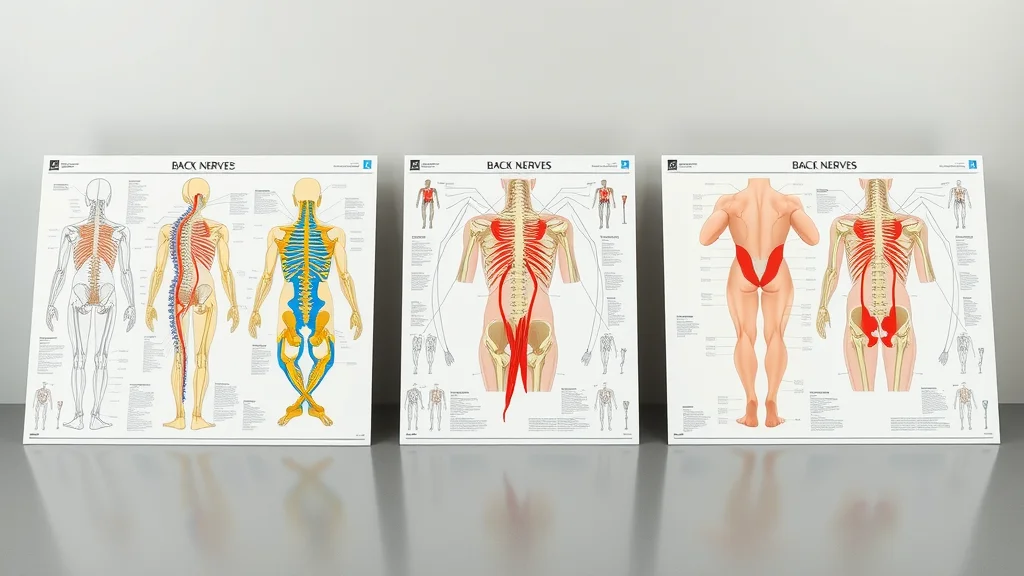
Different Types of spinal nerve chart Visuals
There is no one-size-fits-all spinal nerve chart—options range from classic medical illustrations to stylish minimalist infographics and interactive online resources. Traditional paper charts are ideal for medical offices and classrooms, offering detailed anatomical references. Laminated charts deliver greater durability, perfect for frequent handling or use in busy chiropractic clinics. Meanwhile, digital and interactive charts bring nerves to life, allowing users to zoom, rotate, and even simulate symptoms or nerve function disruptions in real time.
Minimalist visuals strip away excess, focusing solely on the necessary pathways, while photorealistic renderings provide a closer look at texture, depth, and relationships between structures. When choosing a chart, consider who will use it, where it’s displayed, and what educational or diagnostic goals it will serve.
Features to Consider When Buying a back nerves chart
Clarity and detail in spinal column illustrations
Durability and material quality
Educational vs. decorative purposes
Price and customer reviews
The Science Behind the back nerves chart: Nerve Function Explained

How the spinal nerves Control the Body
Each spinal nerve serves as a conduit for carrying information between the body and the brain—initiating everything from muscle movement to temperature sensation, and reflexes. Motor nerves instruct muscles on when to contract or relax, while sensory nerves report back with information about touch, pain, temperature, or vibration. The precise, regionally-organized network means that a disturbance at any point—say, a compressed nerve root from poor posture or vertebral subluxation—can ripple across connected systems, potentially causing pain, numbness, or even digestive and vascular issues in areas like the large intestine or coronary arteries.
This science underscores why accurate knowledge of nerve function is pivotal: by referencing a detailed chart, individuals and professionals alike can decode the “language” of symptoms faster, pursue timely care, and prevent long-term damage.
Nervous system Disorders the Chart Can Help Identify
From common sources of back pain like herniated discs and sciatic nerve compression, to less obvious issues such as autonomic dysfunction or referred pain in the middle ear and outer ear, the back nerves chart provides an invaluable screening tool. By aligning symptoms with their corresponding spinal origin, users can flag signals of neuropathy, muscle weakness, sensory deficits, or system-wide disturbances related to digestive organs or even the bones of the face.
Such early detection empowers users to seek guidance, obtain prompt diagnosis through imaging or physical exam, and implement strategies to halt progression—making the chart a proactive health management resource.
Expert & User Reviews: Evaluating the Best back nerves chart
“The spinal nerve chart makes complex anatomy accessible and actionable for both patients and practitioners.” — Dr. Taylor, Neurologist

Real User Experiences with the back nerves chart
Users consistently rate premium back nerves charts highly for their clarity, accuracy, and visual appeal. Many note that these charts are “eye-opening” for translating unidentified symptoms into a clearer action plan—especially those suffering chronic back pain or pursuing chiropractic care. Professionals highlight the role of charts in guiding efficient consultation, while families use laminated versions for home tracking of recurring issues and to inform conversations with healthcare providers. Overall, user insights point to increased knowledge, self-confidence in managing symptoms, and better collaboration in medical settings.
Frequently Asked Questions: The back nerves chart and More
What are the first signs of nerve damage in the back?
Early signs can include tingling, burning sensations, or numbness localized to the area served by a specific spinal nerve. Weakness, sharp shooting discomfort, or muscle spasms may follow, particularly near the lower back or legs. These symptoms often correspond directly to affected nerve roots visible on the back nerves chart. If such symptoms worsen or persist, consult a healthcare provider for prompt assessment and intervention.
Can a pinched nerve cause a fever?
While a pinched spinal nerve alone doesn’t typically cause fever, severe inflammation or infection near the affected region (like a spinal abscess) can result in fever and systemic symptoms. Always evaluate persistent pain with fever using both a spinal nerve chart and medical consultation to distinguish neurological and infectious causes.
Where are the nerves in your back?
The nerves in your back originate from the spinal cord and branch out through spaces between the bones of your spine, forming a segmental arrangement mapped clearly on the spinal nerve chart. These run throughout the length of the spinal column, connecting at each vertebral level and serving dedicated muscle groups, skin zones, and internal organs.
How do I release a pinched nerve in my back?
To address a pinched spinal nerve, gentle stretching, targeted exercise, ice or heat packs, and corrective posture are commonly advised. Reference your back nerves chart to identify the affected region. Persistent symptoms require evaluation by a doctor, as imaging or specialized therapy may be needed, especially in cases involving associated numbness or weakness.
People Also Ask about the back nerves chart
What are the first signs of nerve damage in the back?
Frequently, the first indications are localized tingling or numbness along a pattern specified by the spinal nerve chart. Discomfort may intensify with movement or specific positions. In some cases, muscle weakness or loss of reflexes in a certain limb can appear, serving as an early warning sign. Refer to the chart for mapped areas most often involved.
Pinpointing early symptoms using the spinal nerve chart
The chart helps you match subtle symptoms—like toe numbness, impaired grip, or radiating pain—to precise nerve roots and vertebral levels. This understanding streamlines both home care and clinical assessment, ensuring symptoms are not dismissed or mistreated due to uncertainty about their cause.
Can a pinched nerve cause a fever?
While it is rare, a fever together with nerve symptoms may signal more serious issues like nerve inflammation with infection. Utilize your spinal nerves chart to localize the involved area and seek professional care when neurological and systemic symptoms co-occur.
Understanding linked symptoms on the spinal nerves chart
Every symptom—burning, tingling, or radiating pain—can be traced to a specific point along the chart. Interactive or detailed visual aids make it easier to connect fever or swelling to potential neural or systemic causes, facilitating timely intervention and recovery.
Where are the nerves in your back?
The nerves run bilaterally from the spinal cord, emerging through small openings at each vertebral segment. The spinal nerve chart provides a straightforward blueprint to identify which nerves are responsible for different regions and functions.
Locating nerves on the spinal nerve chart
Look for labeled, color-coded runs that trace from each spinal segment to their body areas—arms, trunk, lower back, legs, organs. The clear design makes it easy for you or your provider to correlate sensations and pain with corresponding nerves.
How do I release a pinched nerve in my back?
Manage a pinched spinal nerve with careful stretching of the mapped muscle groups, maintaining spinal alignment, and utilizing therapies like massage, heat, or cold. Consulting the back nerves chart ensures you target the right area when discussing therapy or recovery strategies with your care provider.
Managing pain: Tips using the back nerves chart
Interpret your symptoms using the chart before trying home remedies. Track areas of numbness or tightness against the mapped nerve roots, use ergonomic supports, and document changes. This enables you to intervene early and communicate findings for more effective pain management.
Video: How the back nerves chart Enhances Medical Practice
Video: Explaining spinal nerve function with Interactive Charts
Key Takeaways: Why the back nerves chart Matters
Transforms complex data into actionable insight
Supports better health decisions
Trusted by professionals worldwide
Ready to Experience the Benefits? Shop the Leading back nerves chart Products Today
If you’re ready to improve your understanding of the nervous system and take control of your health journey, browse our vetted selection of back nerves charts now—discover instant clarity, smarter choices, and greater well-being at your fingertips.
Conclusion: A back nerves chart is your gateway to deeper understanding, better communication, and proactive health management—make it part of your daily toolkit for lifelong wellness.
As you continue your journey toward better spinal health, remember that understanding your nerve pathways is just one piece of the puzzle. If you ever have questions or want to discuss your unique symptoms with a professional, reaching out to a chiropractic expert can provide personalized guidance and support. Taking the next step to connect with a specialist not only deepens your knowledge but also empowers you to make informed decisions for long-term wellness. Explore your options, ask questions, and embrace a proactive approach to spinal care—your future self will thank you for it.
